Dancing on the Graves: The Sursock Palace Wedding and the Audacity of the Warlords
The Untouchables Series
Published · Updated
Executive Summary
In the theater of Lebanese politics, the ruling class has long operated under a simple premise: they are untouchable. They can bankrupt the state, freeze your deposits, and plunge the capital into darkness, all while expecting you to valet their cars at the restaurants they own.
In the theater of Lebanese politics, the ruling class has long operated under a simple premise: they are untouchable. They can bankrupt the state, freeze your deposits, and plunge the capital into darkness, all while expecting you to valet their cars at the restaurants they own.
But this week, the audacity of the warlords reached a level of dark, Shakespearean irony that even Lebanon’s most cynical citizens found hard to stomach.
The stage was set for September 18, 2026. The event? The lavish wedding of Oussama Khalil, the son of Member of Parliament and former Finance Minister Ali Hassan Khalil.
The venue? Sursock Palace.
To fully grasp the staggering insult of this booking, one must look at the recent history of that very building—and the man who tried to rent it.
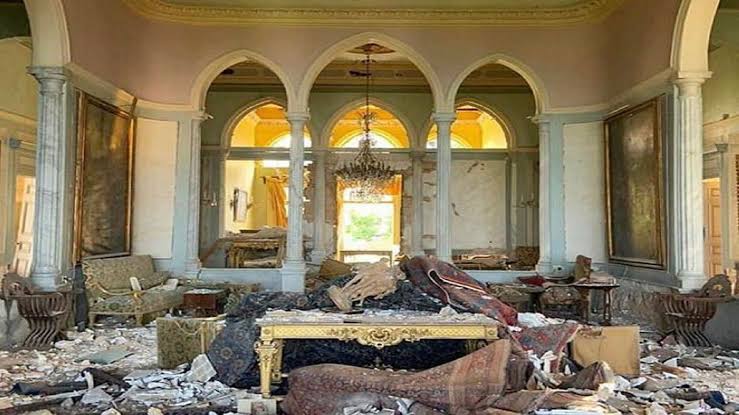
Sursock Palace interior after the Beirut Port explosion. User-supplied photo.
1. The Karma of the Crime Scene
Ali Hassan Khalil is not just a senior politician; he is one of the primary suspects wanted for questioning by Judge Tarek Bitar in the investigation of the August 4, 2020, Beirut Port explosion. For years, he has successfully evaded arrest, hiding behind parliamentary immunity, sectarian red lines, and a paralyzed judiciary.
Sursock Palace, the historic 19th-century architectural jewel in Ashrafieh, was practically gutted by that exact explosion. More tragically, its owner, the 98-year-old Lady Yvonne Sursock Cochrane—a fierce defender of Lebanon’s heritage—was severely injured in the blast and died weeks later.
The sheer sociological pathology required to plan a celebration in the very palace destroyed by the explosion you are accused of being complicit in—owned by a woman who was killed by it—is breathtaking. It is the equivalent of a suspect booking the victim’s living room to throw a party, assuming the public would simply applaud the floral arrangements.
2. The Backpedaling and the Lie
Fortunately, the Lebanese public still possesses a pulse. As soon as the news leaked, social media erupted. The outrage was visceral and immediate, a rare moment of cross-sectarian disgust. Faced with calls for protests and a public relations nightmare, the Sursock Palace administration abruptly canceled the event, stating they had initially been unaware of the groom's identity.
Caught in the spotlight, the political reflex kicked in: deny reality.
Ali Hassan Khalil released a statement claiming that the wedding was never planned to be held at Sursock Palace, dismissing the uproar as a fabricated media campaign. It was a classic warlord pivot. But the digital age is unforgiving. The Palace administration effectively contradicted him, publicly confirming the cancellation of the booking.
When a warlord is caught dancing on a grave, the first instinct is to claim there was never any music playing.
3. The Limits of Impunity
This incident is not just tabloid gossip; it is a profound diagnostic tool for understanding the psychology of Lebanon’s ruling elite.
The Disconnect: They genuinely believe they exist in a parallel dimension where their actions have no social consequences. They do not just want legal impunity; they want social adoration.
The Provocation: Booking Sursock Palace wasn't just poor taste; it was an exercise in dominance. It was a subconscious flex, signaling that they own the ruins they created.
The Power of Pushback: The cancellation proves a vital point. The warlords are immune to the law, but they are terrified of public humiliation. When civil society unified its voice and applied direct social and commercial pressure, the untouchable elite had to retreat.
Karma in Lebanon rarely comes through the court system. But this week, the ghost of Lady Cochrane and the collective memory of a shattered city evicted a warlord from the palace.
Until the judiciary functions, public shame remains the only court we have. Let them celebrate in the dark.
Methodology
User-supplied opinion; Lebanon Think Tank did not independently verify or editorially alter the draft.
Disclosures
Published under the collective Research & Policy Desk byline. Lebanon Think Tank is founder-funded and reports no external funding. The views expressed are the institutional editorial position of the Desk.