The Quiet Empire: How Lebanese Families Built São Paulo's Textile District
Three generations of the Brazilian-Lebanese trading networks that turned Rua 25 de Março into Latin America's largest commercial street.
Published · Updated
Executive Summary
Brazil hosts the world's largest Lebanese-descent population — estimates range from 6 to 10 million. This profile traces how three generations of Lebanese trading families built São Paulo's textile and commerce district, the credit networks that financed newcomers, and the modern transformation of those networks into industrial groups, banks and political careers.
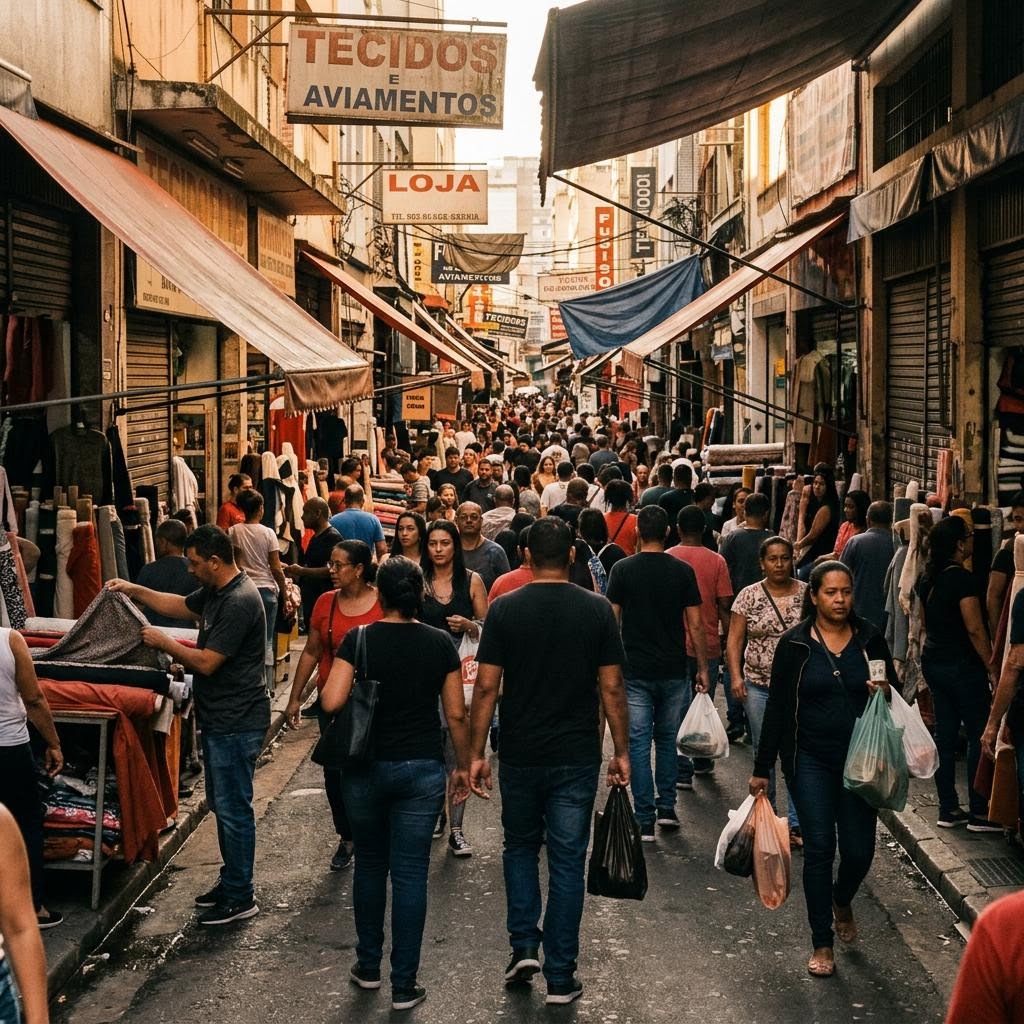
Rua 25 de Março in central São Paulo moves more retail volume than any commercial street in Latin America. Its founding merchants, from the 1890s onward, came overwhelmingly from Mount Lebanon and the Bekaa — peddlers who became shopkeepers, shopkeepers who became importers, importers who became industrialists.
The mechanism was the credit chain: established merchants staked newcomers from their home villages with goods on consignment, repaid from sales — a trust network that functioned as a banking system for immigrants excluded from formal credit. Village and family ties enforced repayment across an ocean. The system converted chain migration into compounding commercial capital.
The third and fourth generations converted commercial capital into industry, finance and public life — including federal ministers, governors, and some of Brazil's largest industrial fortunes. The network's modern form is institutional: chambers of commerce, hospital philanthropy (the Hospital Sírio-Libanês among Latin America's finest), and an emerging generation of investors who are, cautiously, looking at Lebanon again. Their conditions for engagement mirror those of every investor this Institute interviews: functioning courts, honest customs, and a banking system that returns deposits.
Evidence & Sources
- Brazilian immigration records, Santos port registries — Arquivo Nacional (Brazil)
- Academic literature on Syrian-Lebanese migration to Brazil — Various university presses
- Interviews with community historians and family archives — Lebanon Institute
The Credit Chain
How consignment credit enforced by village ties functioned as an immigrant banking system — and why its default rates, by oral account and surviving ledgers, were remarkably low.
Commerce to Institutions
The generational conversion of trading wealth into industry, medicine and politics, and what the network looks like in 2026.
Disclosures
The author is a member of two Brazilian-Lebanese professional associations, disclosed per Institute policy.
Key Numbers
- 6–10M — Estimated Lebanese-descent population of Brazil
- 1890s — First major migration wave from Mount Lebanon