The Paper Trail of the Port: Procurement, Custody and the Questions Nobody Answered
What public records reveal — and conceal — about how 2,750 tonnes of ammonium nitrate sat in Hangar 12 for six years.
By Karim Doumit
Published · Updated
Executive Summary
Six years of correspondence between port authorities, customs, the judiciary and security agencies about the cargo in Hangar 12 are a matter of public record, entered into evidence and reported in court filings. This investigation maps who knew what, when, and what each office was legally empowered to do about it. At least seven official bodies had both knowledge of the cargo and a legal avenue to act. The investigation does not re-litigate the ongoing judicial case; it documents the institutional failure pattern that made the disaster possible and that remains structurally unaddressed.
The August 4, 2020 explosion at the Port of Beirut is the subject of an ongoing — and repeatedly obstructed — judicial investigation. This article does not attempt to determine criminal responsibility. It asks a narrower institutional question: which public bodies knew about the cargo, what powers did each have, and what does the documented correspondence show they did?
The answer, assembled from court filings, published official correspondence and parliamentary testimony, is a case study in how Lebanon's administrative architecture diffuses responsibility until it evaporates. Customs wrote to the judiciary six times requesting authorization to remove or sell the material. The judiciary responded that the request was improperly framed. Port authorities stored the material without the certifications their own regulations require. Security agencies filed reports that ascended the chain and produced meetings, but no removal order.
Each institution can point to a letter it sent. None can point to the action it took. This is the pattern our governance research repeatedly identifies: Lebanese public institutions are structured so that writing a letter substitutes for exercising authority, and the existence of another competent body becomes a reason for inaction rather than coordination.
The reform implications are specific. Custody of hazardous materials needs a single accountable owner with removal authority that does not require inter-agency consensus. Until that structural fact changes, the conditions that produced August 4 persist at the port and at other storage sites our document review identifies.
Evidence & Sources
- Published judicial filings, Port of Beirut case — Beirut Court of First Instance
- Parliamentary session records on port oversight — Lebanese Parliament
- Human Rights Watch: 'They Killed Us from the Inside' — Human Rights Watch
- Customs code of Lebanon (custody and sale provisions) — Lebanese Republic
- Investigative reporting compilation — Multiple outlets
Background
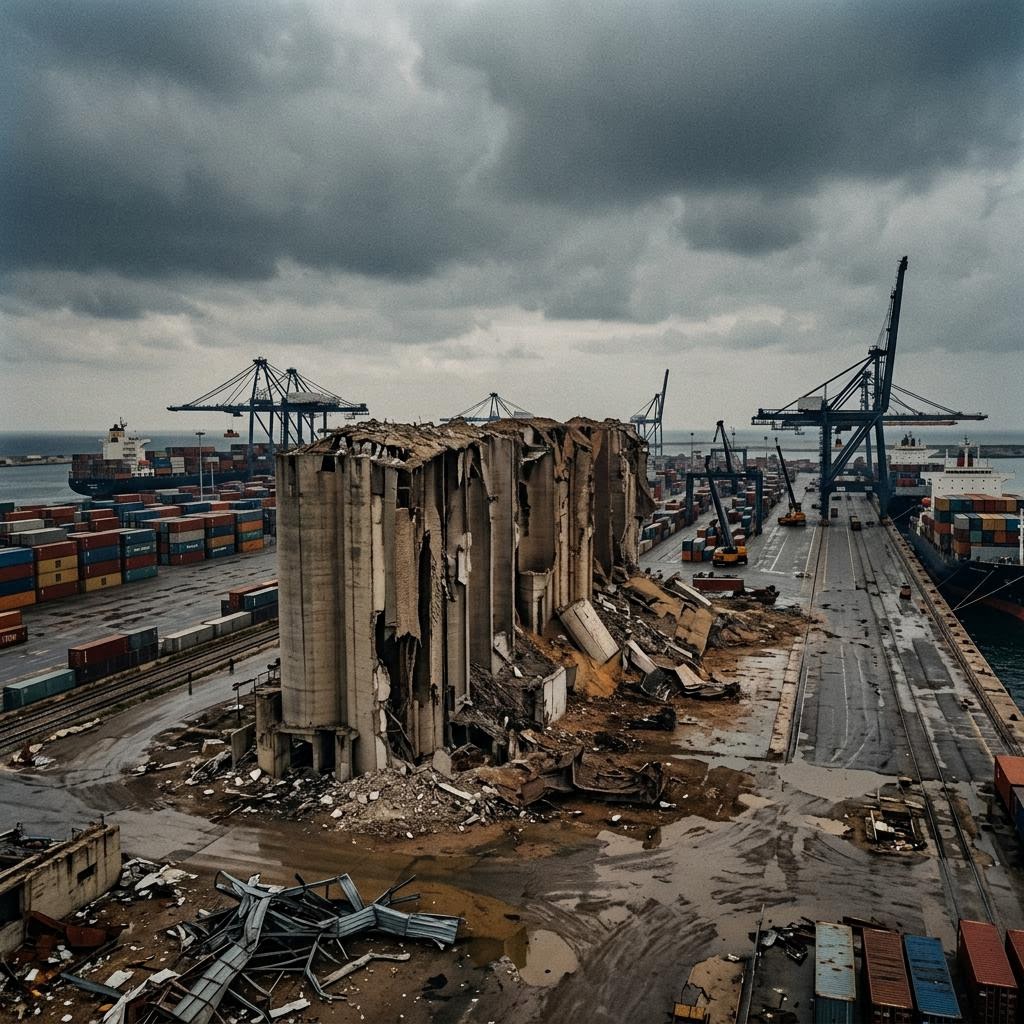
The MV Rhosus docked in Beirut in November 2013 and never left. Its cargo was moved to Hangar 12 in 2014 under a judicial custody arrangement whose terms remain disputed. From that point, the material was simultaneously everyone's problem and no one's responsibility.
The Correspondence Record
The documented letters form a closed loop: customs wrote to the urgent matters judge; the judge ruled the request procedurally defective; customs re-sent substantially the same letter; port authorities forwarded safety concerns to the ministry; the ministry requested reports. Every letter is dated, numbered and in the public record. No letter was followed by physical action in the hangar.
Who Had Authority
Our legal review identifies at least three independent removal pathways: judicial sale under the customs code, administrative removal on safety grounds under port regulations, and emergency action under civil defense law. Each pathway had a competent authority. Each authority instead sought another body's concurrence that no law required.
Counterarguments
Officials have argued the judiciary's custody blocked all administrative action. Legal scholars we consulted dispute this: judicial custody governs ownership, not emergency safety measures. We present both readings and the statutory text so readers can assess the claim.
What Could Realistically Be Done
A hazardous-materials custody law designating a single accountable authority; a public registry of hazardous storage at ports and border crossings; and statutory deadlines after which safety removal is mandatory, not discretionary. None of these require constitutional change.
Right of Reply
We contacted the Port Authority, the Higher Customs Council and the Ministry of Public Works with our institutional timeline and offered 21 days to respond or correct the record. The Port Authority responded that it 'cannot comment on matters before the judiciary.' No other responses were received by the deadline.
Methodology
This investigation relies exclusively on documents already in the public record: published court filings, official correspondence reproduced in parliamentary sessions, and testimony reported by multiple independent outlets. We did not access sealed judicial material. Each claim is mapped to a numbered source; claims resting on single-outlet reporting are marked as such.
Key Numbers
- 6 years — The cargo sat in Hangar 12 (2014–2020)
- 7 — Official bodies with documented knowledge and legal authority to act
- 6 — Customs letters to the judiciary requesting removal
Timeline
Nov 2013 — MV Rhosus docks in Beirut
2014 — Cargo moved to Hangar 12
Stored under disputed judicial custody arrangement.
2014–2017 — Customs writes six letters
Requests to re-export or sell the material; all procedurally rejected.
2019–2020 — Security reports escalate
State security report reaches senior officials weeks before the explosion.
Aug 4, 2020 — Explosion
One of the largest non-nuclear explosions in history.